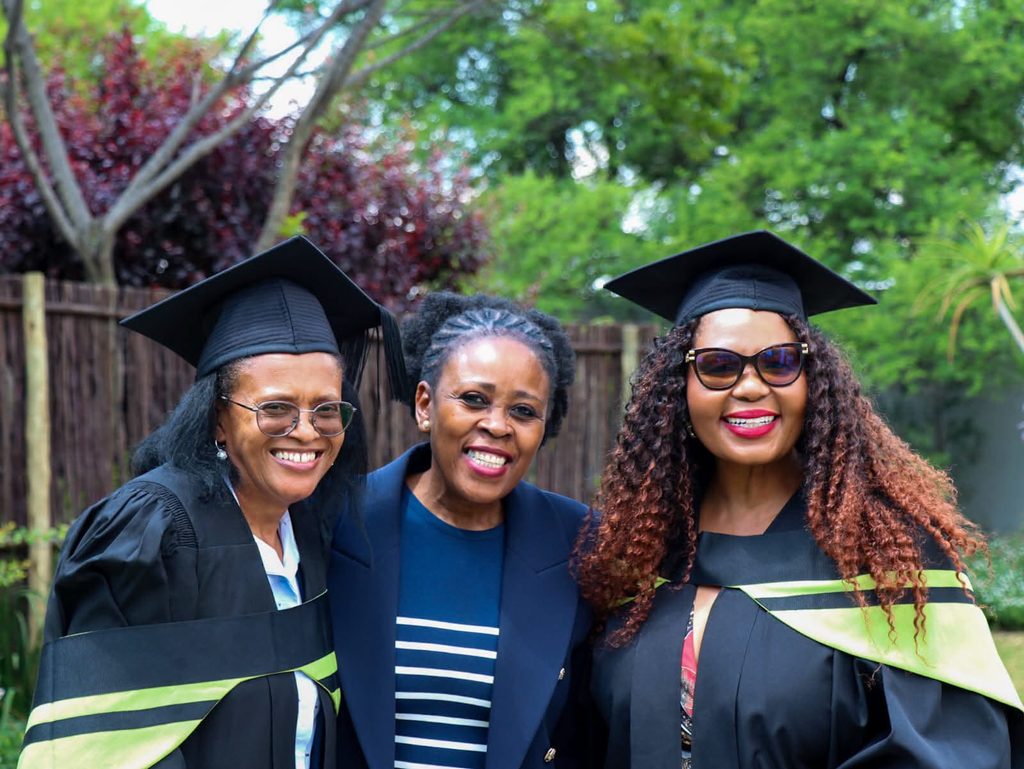
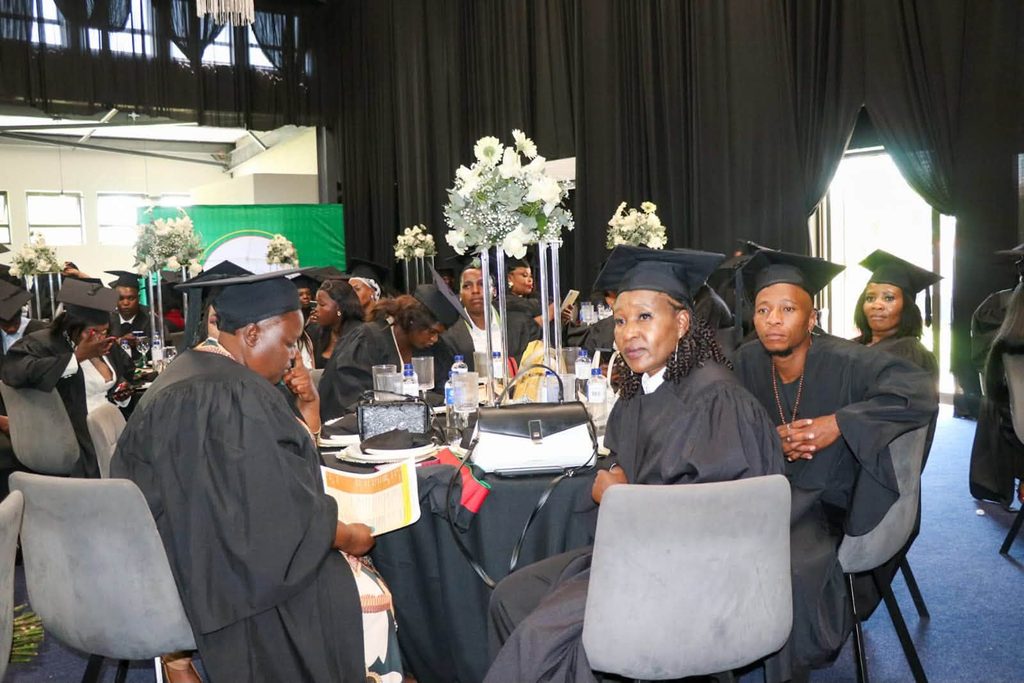
The Gauteng Department of Social Development, in partnership with the Health and Welfare Sector Education and Training Authority (HWSETA), today celebrated the graduation of approximately 310 community care workers who successfully obtained NQF Level 4 qualifications as Auxiliary Child and Youth Care Workers through the Recognition of Prior Learning (RPL) programme.
Held at Apple Blossom Hotel in Roodepoort, the graduation ceremony recognised the skills and experience acquired by caregivers working in Department-funded Non-Profit Organisations (NPOs) within the HIV and AIDS sector across Gauteng’s West and Joburg Regions. The programme provides an opportunity for community care workers to gain formal recognition for knowledge and practical experience acquired through years of service, improving their prospects for career advancement and further education.
Addressing the graduates, Gauteng MEC for Social Development, Nomantu Nkomo-Ralehoko, emphasised government’s responsibility to ensure that experience and practical knowledge are recognised as valuable pathways towards professional development. “Today is a celebration of a powerful principle: learning is not confined to a classroom, knowledge is not acquired only through formal education, and human potential must never be measured solely by certificates,” said MEC Nkomo-Ralehoko.
She added that creating opportunities for people to advance their skills, regardless of their educational background, remains central to government’s commitment to dignity, equality and economic empowerment. “Our responsibility as government is to build a society where opportunities are not denied to people simply because their learning journey has been different. This speaks directly to our constitutional commitment to dignity, equality and the right to further education,” she said.
Deputy Minister of Social Development, Ganief Hendricks, also addressed the ceremony, highlighting the need to strengthen the social service workforce. He proposed that funds recovered through efforts to eliminate fraudulent social grants be redirected towards employing more social workers, auxiliary social workers, and child and youth care workers.
For the graduates, the qualification marks an important milestone and opens doors to new career possibilities. Queen Mlambo (25), from Thabang Lephele, an HIV and AIDS organisation based in Muldersdrift, expressed gratitude for the opportunity, saying the qualification has motivated her to pursue further studies. “I appreciate this opportunity, and my wish is to study further and become a social worker because I am already working in the field,” said Mlambo.
Her sentiments were echoed by Thembi Khosa (27), from Baid Haleema Saadiys Organisation in Freedom Park, who hopes to pursue a career in social work, driven by her passion for working with children. Meanwhile, Mapelani Macdonald Mbhalati (26), a caregiver at Sizanani Home-Based Care in Soweto, is already exploring new employment opportunities following his achievement. “Now that I am a qualified Auxiliary Child and Youth Care Worker, I am already searching for employment opportunities in my new field,” he said.
Through partnerships with institutions such as HWSETA, the Department continues to invest in skills development, professionalisation of the social service workforce and improved career prospects for individuals serving vulnerable communities.