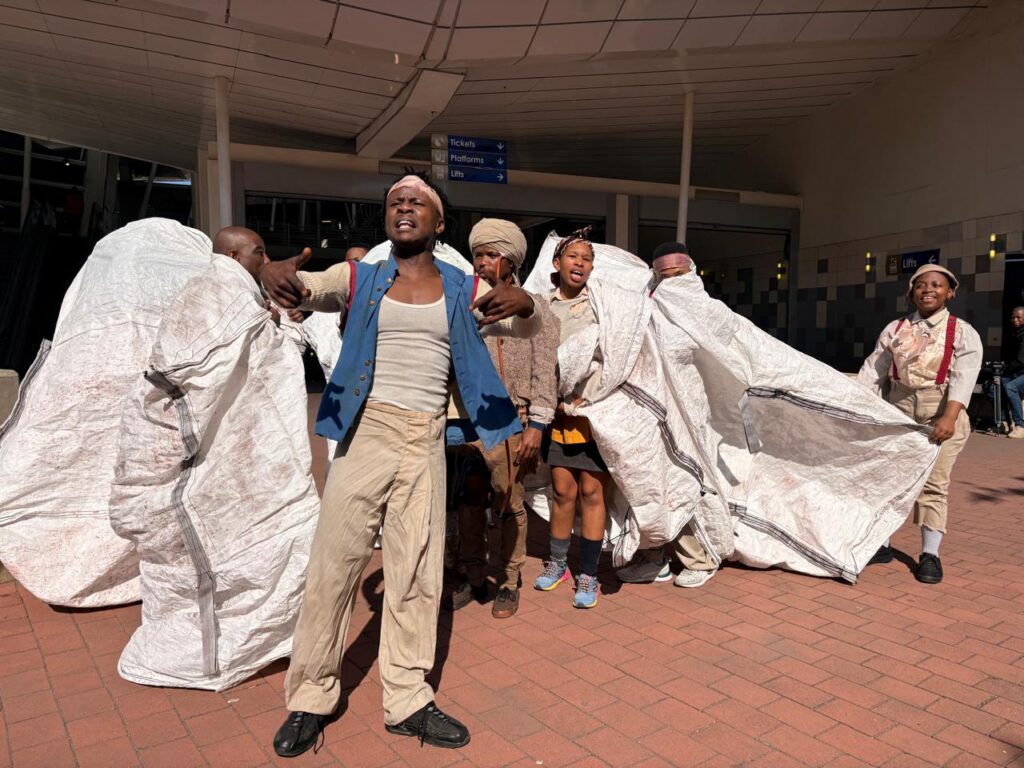
In celebration of Transport Month, the Gautrain today hosted the activation event for its pioneering Art in Transit project at Sandton Station a powerful initiative that positions the Gautrain system as a moving canvas for South African art, culture, and storytelling.
The Art in Transit project is designed to reimagine Gautrain spaces from platforms to trains and buses as vibrant, inclusive environments where all South Africans feel seen, inspired, and connected. By integrating curated visual and performance art across the network, the project seeks to enhance the passenger experience while reflecting the rich diversity, heritage, and creative spirit of our country.
To bring this vision to life, Gautrain has partnered with The Market Theatre Foundation, one of South Africa’s most respected cultural institutions, as a key and instrumental collaborator. With its deep roots in South African storytelling and a proud legacy of artistic excellence, The Market Theatre Foundation is uniquely positioned to help curate and deliver impactful, authentic art experiences within Gautrain spaces.
“Art in Transit is about more than aesthetics, it’s about transformation. This initiative signals our commitment to making Gautrain a space where people don’t just pass through, but where they pause, connect, and reflect. We’re proud to be leading this initiative and to have the Market Theatre Foundation as a central partner in this journey,” says Tshepo Kgobe, CEO of the Gautrain Management Agency.
The Market Theatre Foundation’s CEO, Tshiamo Mokgadi, hailed the partnership as historic, driving arts education while ensuring artistic mobility by moving South African artists into new spaces beyond galleries and theatres.
“The history of passenger rail in South Africa has always been intertwined with storytelling – each journey unfolding like a performance, with passengers as the cast. Through this partnership, we continue to imagine travel as narrative, where movement and meaning converge. The Market Theatre Foundation is honoured to collaborate with Gautrain, a world-class platform, on this culture-shifting initiative,” Mokgadi says.
As the The Market Theatre prepares to celebrate its 50th anniversary in 2026, this partnership provides an opportunity to extend its legacy into new and dynamic public spaces. Today’s event at Sandton Station featured live performances, theatre, and a photographic exhibition, all curated by The Market Theatre Foundation’s business, turning the station into a stage pulsing with South African expression.
The project will be rolled out in phases across the Gautrain network, representing a powerful convergence of mobility, identity, and culture. Championed and supported by the Gauteng Tourism Authority (GTA), the CEO of the Authority, Sthembiso Dlamini, emphasised that reliable transport is essential for the tourism sector. “Whether international visitors are landing at O.R Tambo International Airport or local tourists are exploring the country, their entire experience depends on how easily they can move around,” says Dlamini. “This initiative by the Gautrain links well with our broader Gauteng Destination Beautification and Place Marketing Strategy, which seeks to activate urban and township spaces through visual storytelling and artistic expression, thereby fostering local pride, enhancing the aesthetic environment, and contributing to tourism development.
“This is just the beginning,” Kgobe says. “The Art in Transit Project signals a new chapter in how we experience public transport, not just as a means of getting from one place to another, but as a space for cultural expression, shared identity, and national pride. Through this initiative, the Gautrain becomes more than a train, it becomes a stage, a gallery, a mirror of who we are as South Africans,” he adds.
“As Transport Month underscores the importance of connectivity and inclusion, the Gautrain is proud to lead this innovative cultural journey with the Market Theatre Foundation, the Gauteng Tourism Authority, and other partners helping shape this transformative vision,” Kgobe concludes.