New platform aims to strengthen balanced storytelling, deepen collaboration and reshape how China–South Africa relations are reported
By Thembi Moyo
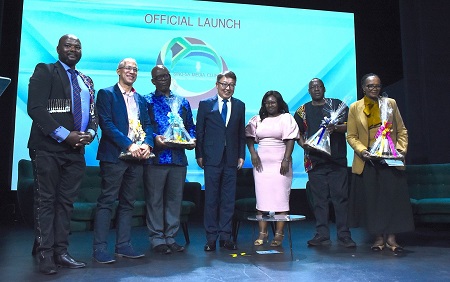
Pretoria 2 April 2026- A new media initiative aimed at reshaping how China–South Africa relations are told and understood has been officially launched, bringing together journalists, government leaders and diplomats under one platform.
The Sino-SA Media Club, a non-profit organisation, was unveiled this week as a space dedicated to promoting ethical, balanced and informed reporting on the growing relationship between the two nations. The initiative positions itself as a bridge between media communities in China and South Africa, at a time when global narratives are often contested and fragmented.
Speaking at the launch, founding President Frans Sello Waga Machate described the moment as a turning point for storytelling between the two countries. “This is not simply the launch of a structure. It is the formalisation of a belief that the story of China and South Africa deserves a dedicated, professional and ethical platform,” said Machate.
He explained that the club was created to address gaps in coverage and to provide journalists with better access to information, networks and opportunities. “We identified a need for a proactive hub one that doesn’t just report, but helps build understanding and cultivates informed, balanced journalism,” he said.
Built on the motto “Bridging Voices, Sharing Futures,” the club aims to create meaningful dialogue between media practitioners while strengthening people-to-people connections. Its work will include training, policy engagement, storytelling platforms and international exchanges.
Among its key programmes for 2026 are media briefings, a virtual seminar series on China’s development, and a flagship fellowship programme that will see selected South African journalists travel to China for first-hand reporting experience. The club also plans to host an annual symposium and awards to recognise excellence in reporting on China–South Africa relations.
Chinese Ambassador to South Africa, Wu Peng, welcomed the initiative, describing media as a critical link between nations in an increasingly complex information environment. “The media are a vital bridge between peoples and an essential channel for conveying the truth,” he said.
He stressed the importance of fair and objective reporting, noting that both countries have a responsibility to tell their own stories more effectively. “South Africa’s development and culture deserve to be better understood by Chinese audiences, just as China should be viewed in an objective and fair way,” Wu said.
Highlighting the depth of bilateral relations, he pointed to growing economic cooperation between the two countries. “Nearly 300 Chinese companies are operating in South Africa, creating more than 400,000 jobs. These are real stories that must be told properly,” he said.
The launch comes amid strengthening ties between the two nations, including ongoing cooperation in trade, infrastructure development and global governance. Recent high-level engagements between leaders of both countries have further reinforced this partnership, with both sides committing to deepen collaboration across sectors.
Acting Government Communication and Information System (GCIS) Director-General Nomonde Mnukwa said the timing of the initiative was significant, particularly as the media landscape continues to evolve rapidly due to digital platforms and social media. “Today, the power to shape narratives is no longer limited to traditional media. Social media and digital platforms have changed how information is created and consumed,” she said.
She warned that the rise of misinformation and disinformation poses a serious threat to democracy and public trust. “Democracy suffers when it becomes difficult to distinguish fact from fiction,” Mnukwa said. She also emphasised the importance of African countries reclaiming their narratives on the global stage. “If we don’t tell our own stories, others will tell them for us often through lenses of crisis, poverty or conflict. That is not the full story of who we are,” she said.
The Sino-SA Media Club is expected to work closely with institutions such as government departments, media houses and academic bodies to build a strong network of professionals committed to accurate and impactful storytelling. It will also leverage digital platforms to expand its reach and engage wider audiences.
As the event concluded, speakers expressed optimism that the initiative would play a meaningful role in strengthening mutual understanding and shaping a more balanced global narrative. “Our goal is to empower journalists with access, resources and connections to tell stories that reflect the true nature of this partnership,” said Machate.
With its focus on collaboration, training and exchange, the Sino-SA Media Club is positioning itself as a key player in the future of international media cooperation and a bridge not only between governments, but between people.